

We Buy Used Circuit Breakers
Surplus Buyers & Demo buys used and new-surplus circuit breakers in any quantity — a single power breaker out of a switchgear lineup, shelves of molded-case spares from a storeroom purge, or the breaker content of a full plant cleanout. Breakers are the most information-sensitive equipment in the electrical world: the same breaker is worth real money with its label photographed and close to nothing tossed unidentified into a scrap container. We price breakers by the label, in writing, and we buy nationwide from our Houston, Texas base.
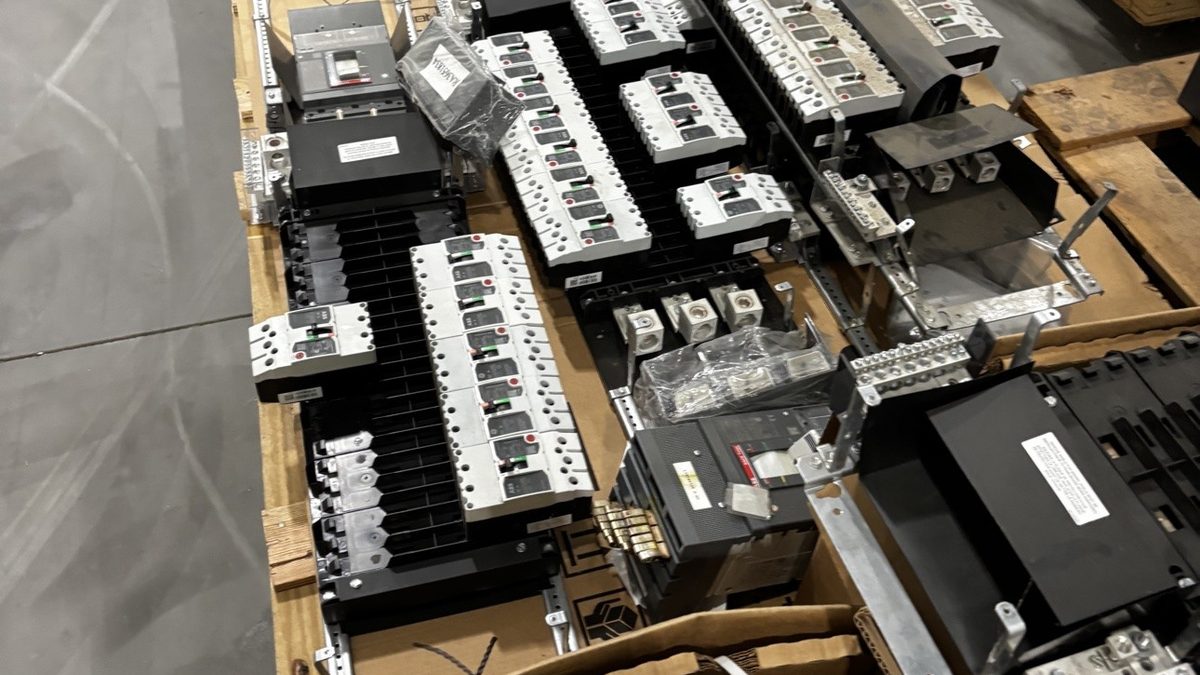
What We Buy
- Power (air) circuit breakers — draw-out breakers for switchgear: Square D Masterpact, Eaton / Cutler-Hammer Magnum, Siemens WL, GE EntelliGuard and legacy AK / AKR series, Westinghouse DS, ABB Emax.
- Insulated-case breakers — higher-rated, feature-rich breakers used as mains and large feeders.
- Molded-case circuit breakers — panelboard, MCC bucket, and distribution breakers from small frames up through large 2000A-class frames, including Square D PowerPact and legacy I-Line breakers.
- Motor circuit protectors and supplementary breakers when they are part of a larger lot.
- Brands we buy: Square D (Schneider), Eaton / Cutler-Hammer, Siemens, GE, ABB, Westinghouse, ITE, and Allen-Bradley.
- Conditions: new in box, new surplus out of box, tested, as-removed and untested, and complete storeroom or warehouse lots.
What Sets the Price
- Brand and series. The big installed brands have the deepest resale demand because facilities stock spares to match what they run. Current series and legacy series price differently — and legacy is not a synonym for worthless.
- Frame size and amp rating. Larger frames cost far more new, were made in smaller numbers, and cannot be substituted with something smaller — so they hold used value best. Small common breakers are priced by quantity.
- Trip unit. Electronic trip units with adjustable protection settings are worth more than fixed thermal-magnetic trips. The trip unit face is part of the price, so it belongs in the photos.
- Obsolete status — in both directions. Many discontinued frames are worth more because they are discontinued: every plant still running that gear must buy used. A few notorious lines with documented failure histories are the exception, and price thin or not at all. The label tells us which kind yours are.
- Condition and completeness. Sealed new surplus sits at the top, then tested, then honest as-removed. Burned, heat-discolored, or fault-damaged breakers fall to parts value. Lugs, shutters, cradles, and racking hardware travel with value on draw-out breakers.
- Quantity and sorting. A sorted lot — breakers grouped by type, with counts — is priced as equipment. A mixed container is priced as a gamble, and gambles price low.
What to Photograph
- The front or side label of each breaker type — manufacturer, catalog or series number, amp rating. One clear photo per type is enough; you do not need to photograph every piece in a stack of identical breakers.
- The trip unit face on insulated-case and power breakers.
- One wide shot of each shelf, pallet, or stack, with a count per type.
- For draw-out breakers, the cradle and any accessories that go with them.
- Anything burned, cracked, or heat-discolored, shown honestly — condition disclosed up front keeps the written offer firm.
How Selling Them Works
Step 1 — Send label photos and counts. Call or text (346) 733-1238, or use the quote form. Group breakers by type before you photograph them — sorting is the cheapest value you can add.
Step 2 — Get a written offer for the lot, priced as identified equipment. If the breakers are still in a lineup or MCC, say so — gear often prices better together.
Step 3 — Pickup is arranged on your schedule, whether the lot is one pallet or a full storeroom.
Step 4 — Payment on pickup, with a documented bill of sale.
New Surplus, As-Removed, and Full Storerooms
Breaker lots arrive in three shapes, and each prices on its own logic. New surplus — gear bought for a project that changed, was cancelled, or never started — is the strongest category, especially sealed in the box with a current catalog number. As-removed breakers from upgrades and cleanouts are the everyday market: untested, honestly described, and priced on label and condition. Storeroom lots — decades of accumulated spares — price best when a buyer can see their shape: photograph each shelf, label each distinct type, and give rough counts. A photographed shelf becomes a firm lot offer; a verbal description of "a bunch of breakers" cannot be priced as anything but a guess.
The Small Parts on the Breaker Matter Too
On larger breakers, the accessories fitted to the unit move the price. Shunt trips, undervoltage releases, auxiliary switches, bell alarms, and motor operators are all options a buyer prices in when they are present — and they are noted on the label and visible on the breaker face, which is another reason the trip-unit photo matters. On draw-out power breakers, the cradle, shutters, and racking mechanism belong with the breaker; a breaker separated from its cradle is worth less than the pair. If your breakers are still racked into switchgear, leave them there until the lineup is priced — the accessories question answers itself when everything is photographed in place.
Two habits protect your money: never pressure-wash or paint breakers to clean them up — water ruins them and paint hides the label and the condition — and price any lineup whole before pulling its breakers out. Send the label photos first, and we will tell you straight what the lot is worth.
Frequently Asked Questions
What do you need to price a breaker?
A photo of the label showing manufacturer, catalog or series number, and amp rating, plus the quantity you have. On larger frames, a photo of the trip unit helps complete the price.
Do breakers have to be tested before you will buy them?
No. We buy new-in-box, tested, and as-removed untested breakers every week. Testing raises value where it exists, but it is not a requirement for an offer.
Are discontinued breakers worth anything?
Often yes — sometimes more than current models, because facilities running discontinued gear have no new source. A small number of lines with known failure histories are the exception. Send the label and we will tell you which kind yours are.
Should I pull the breakers out of my switchgear before selling?
Price the lineup whole first. A complete lineup usually earns more as a unit than its breakers and shell earn apart. If the gear is already gone, we price the loose breakers on their own.
I only have a few breakers. Is it worth a call?
For a single large frame, yes. For small quantities of common breakers, combining them with other electrical surplus in one lot usually produces the best overall number — one pickup clears everything.
How am I paid?
Payment on pickup, with a documented bill of sale. Larger projects can be set on agreed written terms before pickup.
Send photos of the nameplate and the gear — call or text (346) 733-1238 for a written offer.
Office: (346) 526-1405 · Toll-free: 1 (877) 722-6048
Tell Us What You Have →