

How to Read a Transformer Nameplate Before You Sell
Every transformer carries its own résumé, riveted to the tank: the nameplate. To most owners it is a dense little grid of abbreviations. To a buyer, it is the entire first conversation — size, fit, age, weight, and value are all printed there in plain sight. Learning to read that plate before you sell does two things for you: it lets you describe your transformer like someone who knows what he has, and it lets you spot when an offer does not match the machine in front of you. This guide translates the nameplate line by line, in the order a buyer reads it.
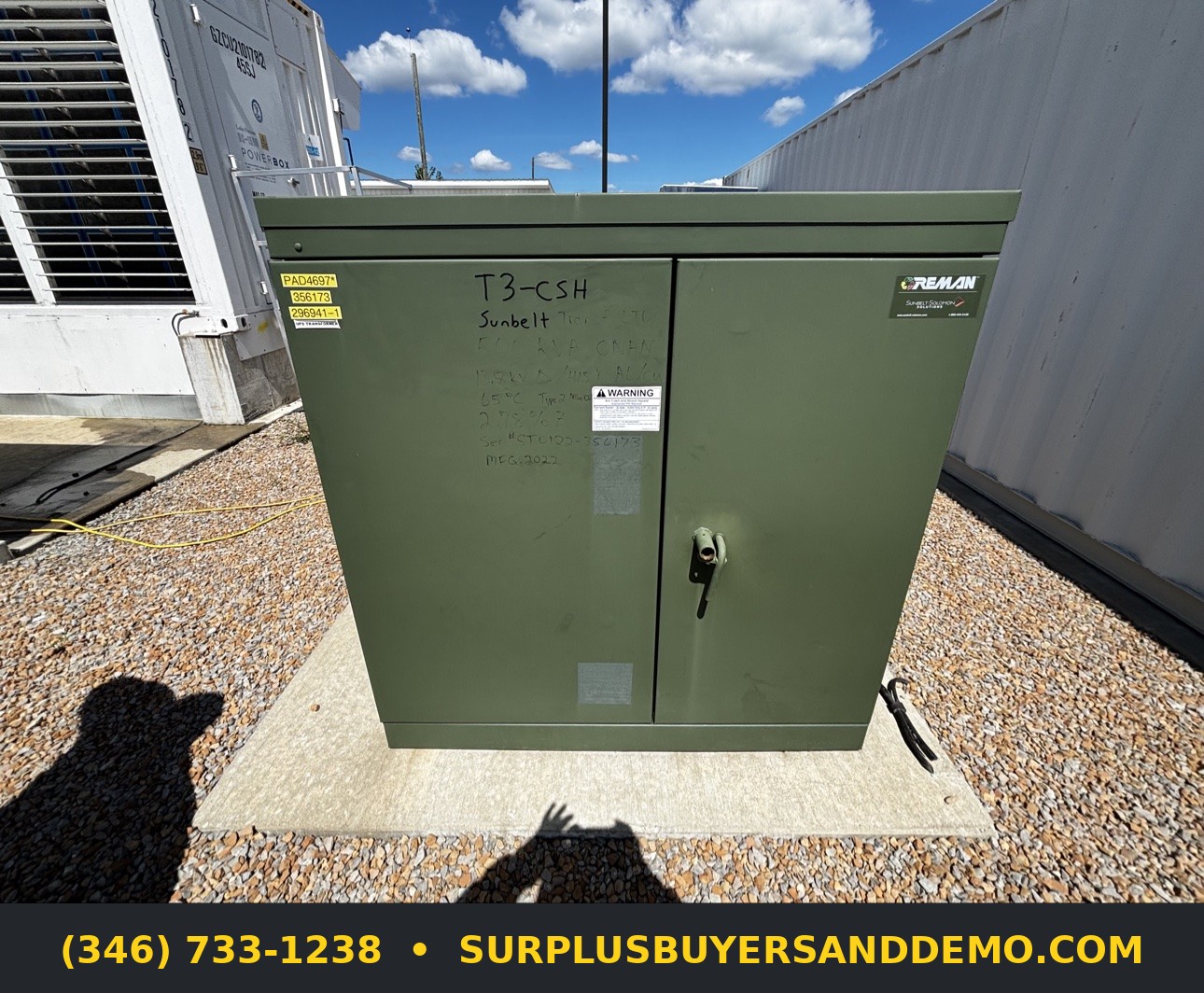
Line One: kVA — the Size of the Machine
The kVA rating is the transformer's capacity — how much power it can deliver. It is the first number a buyer looks for because it decides which facilities could even use the unit. Nameplates may list a single rating or a stepped series of ratings (for example, a base rating and higher ratings that apply with fan cooling). Read all of them off the plate. As a seller, your job is simply accuracy: kVA is not a detail to round, guess, or read off the building's electrical drawings instead of the machine itself. The plate on the tank is the truth.
Voltages: HV, LV, and Taps
The plate lists the high-voltage (primary) and low-voltage (secondary) ratings — the power the transformer takes in and the power it delivers. Common industrial secondaries and utility primaries fit the most buyers; unusual combinations fit few, which is why voltage lines move the price as much as size does. You will also see tap information: taps let the secondary voltage be adjusted within a small range, and dual-voltage or multi-tap primaries widen the machine's market. The winding configuration (delta or wye on each side) is printed here too. You do not need to understand the engineering — you need those lines legible in your photo, because a buyer cannot price a transformer whose voltages he cannot read.
Impedance, Serial Number, and Date
Impedance is listed as a percentage figure on the plate. Buyers and engineers care about it because a replacement transformer has to coordinate with the facility's protection and fault levels — a machine whose impedance fits standard practice is an easier placement. The serial number is the machine's fingerprint: from it, a buyer can often confirm the manufacturer, the build configuration, and sometimes the winding material with the factory. The date of manufacture (sometimes a year printed directly, sometimes decoded from the serial) frames the machine's era — which matters for design, for expected remaining life, and for the next line on this list.
Weight and Gallons: The Plate's Quiet Value Clues
Most oil-filled nameplates list the total weight of the unit and the oil volume in gallons. Sellers skip these lines; buyers never do. Weight tells a buyer two things at once: what it will take to rig and haul the machine, and — compared against the kVA — a strong clue about what is inside. Copper-wound transformers are noticeably heavier than aluminum-wound units of the same rating, and the plate weight is often the first evidence a buyer weighs when winding material is not stated outright. Oil gallons matter for handling and transport planning. When you photograph the plate, make sure these lines are in frame — a cropped photo that cuts off the weight has cut off part of your price.
Oil Type and the PCB Line
The plate names the insulating fluid — mineral oil on most units, and on some, a notation that demands attention. Transformers built before the late 1970s may contain PCB oil, and older plates may carry markings from that era. The plate alone does not prove what is in the tank today — oil can be changed over a machine's life — but the plate's era and markings tell a buyer whether testing will be part of the sale. If your facility has oil test records, they are worth real money next to this plate: documented non-PCB oil protects the machine's value. No paperwork and an old plate does not kill a sale; it just means a test joins the process, which is normal and expected.
Dry-Type Plates: The Shorter Version
Dry-type transformers carry the same essentials in a shorter plate: kVA, primary and secondary voltages, impedance, serial, and manufacturer — plus the insulation class and temperature rise rating, which tell a buyer the machine's design family. No oil lines, no gallons. Everything else in this guide applies the same way: photograph the whole plate, keep every line legible, and let the machine describe itself.
When the Plate Is Gone
It happens: the nameplate is torn off, painted over, or rusted past reading. The machine is not anonymous yet. The serial number is often stamped in a second location — on the tank or frame — and the unit's physical dimensions, bushing arrangement, and radiator configuration narrow its identity considerably. Paper trails help too: the facility's one-line diagrams, purchase and maintenance records, and past oil test reports frequently name the machine's ratings and maker. A buyer working from that evidence can usually identify a transformer well enough to price it — with a discount for the remaining uncertainty, which is the honest cost of a missing plate. Two lessons follow. If your plate is intact, protect it: it is worth money exactly as it sits. And if a plate is damaged, say so in the first message and send the evidence you have. The seller who volunteers the problem gets priced on the machine; the seller whose buyer discovers it gets priced on the discovery.
Photographing the Plate So a Buyer Can Use It
Step 1 — Clean the plate, not the machine. A wipe across the nameplate itself is enough. Do not paint, pressure-wash, or wire-brush it — a damaged plate helps no one.
Step 2 — Shoot it straight on, close enough that every line is readable when zoomed, with light on the plate rather than behind it. Take a second shot at a slight angle if glare washes out the stamping.
Step 3 — Back up and frame the whole unit from two sides, showing bushings, radiators, and any visible leaks or damage.
Step 4 — Send plate and unit photos together. That combination is what turns a conversation into a written offer — and it is the fastest route to knowing what your transformer is actually worth.
Surplus Buyers & Demo buys transformers nationwide from our Houston base — padmount, substation, pole, and dry-type. Send a nameplate photo you can read, and we will read it the way a buyer does — then put a written number on the machine behind it.
Frequently Asked Questions
My nameplate is faded or partly unreadable. Can you still price the transformer?
Usually, yes. Send the best photos you can get — a straight-on shot and one at an angle for glare — plus the unit's dimensions and any paperwork. The serial number alone often lets a buyer recover the key details.
Where is the nameplate located?
On oil-filled units, it is riveted to the tank, typically on a side face near the top. On dry-types, look on the enclosure or the core frame inside the cover. Photograph it where it sits; do not remove it.
Does the nameplate say whether the windings are copper or aluminum?
Sometimes — some plates state the winding material directly. When they do not, the listed total weight for the kVA size is a strong clue, and the manufacturer can often confirm from the serial number.
Why does impedance matter to a buyer?
A replacement transformer must coordinate with the facility's electrical protection and fault levels, and impedance is part of that fit. Standard impedance values place more easily, which supports the price.
The plate mentions oil from the 1970s. Does that mean PCBs?
Not necessarily — oil may have been changed since, and only a test confirms what is in the tank now. An older plate means testing becomes part of the sale, which is a normal step, not a dead end.
How am I paid?
Payment on pickup, with a documented bill of sale. Larger projects can be set on agreed written terms before removal starts.
Send photos of the nameplate and the gear — call or text (346) 733-1238 for a written offer.
Office: (346) 526-1405 · Toll-free: 1 (877) 722-6048
Tell Us What You Have →